


How Private Label Brands Are Reshaping the Global Retail Landscape
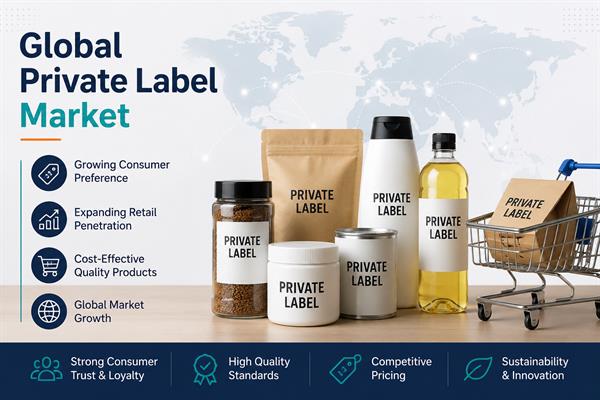
The retail industry has undergone significant transformation in recent years as consumers become increasingly value-conscious while still expecting quality products. One of the most notable developments within this evolving environment is the growing popularity of private label products. Once considered low-cost alternatives to national brands, private label offerings have expanded across multiple product categories and are now viewed as credible, high-quality options by a broad range of consumers.
According to a MarkNtel Advisors study, the Private Label Market Report highlights strong growth prospects for the industry during the forecast period. The increasing acceptance of retailer-owned brands, combined with changing consumer purchasing behavior and ongoing product innovation, is contributing to market expansion across both developed and emerging economies. Private label products are gaining traction in categories such as food and beverages, personal care, household products, apparel, and healthcare items.
Understanding the Rise of Private Label Products
Private label products are manufactured by third-party producers and sold under a retailer’s brand name rather than a national or manufacturer-owned brand. Over time, retailers have significantly improved product quality, packaging, and branding strategies, enabling private label products to compete directly with established brands.
Consumers are no longer choosing these products solely because of lower prices. Many shoppers now perceive private label offerings as delivering comparable quality while providing better value. This perception shift has helped retailers strengthen customer loyalty and increase market share within highly competitive retail environments.
As retail competition intensifies, private label strategies are becoming increasingly important for businesses seeking to differentiate themselves and build stronger relationships with consumers.
Value-Conscious Consumers Continue to Drive Demand
Economic uncertainty and inflationary pressures have encouraged consumers to pay closer attention to product pricing. As household budgets face greater scrutiny, many shoppers are actively seeking affordable alternatives without compromising product quality.
Research from the Organisation for Economic Co-operation and Development (OECD) consumer insights indicates that inflation and changing spending habits continue to influence purchasing decisions across global markets. In this environment, private label products often present an attractive option for consumers looking to maximize value while maintaining their preferred lifestyles.
Retailers have responded by expanding private label portfolios and introducing products across a wider range of price points, from budget-friendly essentials to premium offerings designed to compete with leading national brands.
Premium Private Labels Gain Market Attention
One of the most significant market trends shaping the industry is the emergence of premium private label products. Retailers are increasingly investing in product quality, packaging design, ingredient sourcing, and innovation to attract consumers seeking premium experiences.
This shift has transformed the perception of private label products from basic alternatives into credible choices capable of competing with established brands. Categories such as organic foods, gourmet products, skincare, and wellness-focused items have seen particularly strong growth within premium private label segments.
The ability to deliver quality products at competitive prices has enabled retailers to strengthen consumer trust while enhancing profitability and brand recognition.
E-Commerce Expands Private Label Opportunities
The continued growth of e-commerce has created new opportunities for private label brands. Digital retail platforms allow retailers to showcase their own brands directly to consumers while leveraging customer data to understand purchasing preferences and identify emerging trends.
According to the United Nations
Conference on Trade and Development (UNCTAD) digital commerce research, online retail continues to play an increasingly important role in global consumer spending patterns. This growth has provided private label brands with additional visibility and access to a wider customer base.
Online channels also enable retailers to promote exclusive products, implement targeted marketing campaigns, and gather valuable consumer insights that support future product development efforts.
Sustainability Influences Product Development
Sustainability considerations are becoming increasingly important in consumer purchasing decisions. Many shoppers now evaluate products based not only on price and quality but also on environmental impact and responsible sourcing practices.
The United Nations Environment Programme (UNEP) sustainable consumption initiatives continue to emphasize the importance of responsible production and consumption. Retailers are responding by incorporating recyclable packaging, ethically sourced ingredients, and environmentally conscious manufacturing processes into their private label strategies.
Sustainability-focused initiatives help retailers meet evolving consumer expectations while strengthening the long-term appeal of their private label portfolios.
Innovation Remains a Key Competitive Strategy
As competition within the retail sector increases, innovation has become essential for private label success. Retailers are continuously introducing new product formulations, packaging formats, and category expansions to maintain consumer interest and differentiate their offerings.
Data analytics and consumer insights are playing an increasingly important role in product development. By analyzing purchasing behavior and emerging market trends, retailers can identify gaps in the market and develop products that align with changing consumer preferences.
This approach allows private label brands to remain agile and responsive while competing effectively against established national brands.
Future Industry Outlook
The future outlook for the private label market remains closely linked to evolving consumer expectations, economic conditions, and retail innovation. As consumers continue seeking value-driven products that deliver quality, convenience, and sustainability, private label brands are expected to strengthen their position across multiple product categories.
Retailers are likely to continue investing in premium product development, digital commerce strategies, and sustainability initiatives to enhance competitiveness and support long-term growth. These efforts will play a crucial role in shaping future industry trends and influencing consumer purchasing behavior.
Conclusion
Private label brands have evolved from low-cost alternatives into an important component of the modern retail landscape. Improvements in product quality, increased consumer trust, and growing demand for value-oriented products have significantly strengthened their market position.
As retailers continue expanding their private label portfolios and investing in innovation, the sector is expected to remain a key area of focus within the global retail industry. Changing consumer priorities, digital transformation, and sustainability initiatives will continue influencing market trends and shaping the future direction of private label products.