



Loading, please wait...

A to Z Full Forms and Acronyms

Plant-Based Dairy Consumption Is Reshaping Consumer Preferences Across the US

May 21, 2026 Plant-Based Dairy products , 1 Views
Explore how health awareness, sustainability concerns, and product innovation are driving growth in the US plant-based dairy market.
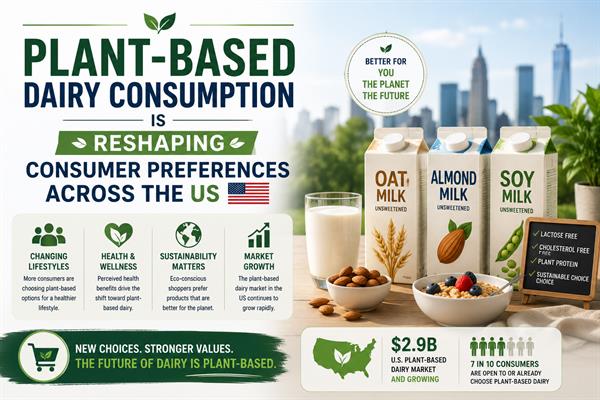



Consumer preferences in the United States are steadily evolving as dietary awareness, sustainability concerns, and lifestyle-focused food choices influence purchasing behavior. Among the categories witnessing notable transformation is the plant-based dairy sector, which has expanded beyond niche vegan consumption into mainstream retail and food service channels.

Products such as oat milk, almond milk, soy yogurt, plant-based cheese, and dairy-free creamers are increasingly appearing across supermarkets, cafés, restaurants, and household kitchens. The category’s expansion reflects broader shifts in consumer eating habits as individuals seek alternatives aligned with health, environmental, and ethical considerations.

According to MarkNtel Advisors, the US plant-based dairy market is experiencing growth due to rising consumer demand for dairy alternatives, continuous product innovation, and increasing availability across retail distribution networks. Manufacturers are also diversifying formulations and flavor profiles to appeal to a wider consumer base.

Health Awareness Is Influencing Dietary Choices

One of the major factors supporting plant-based dairy adoption in the US is growing health consciousness among consumers. Many individuals are actively monitoring ingredient labels, calorie intake, sugar content, and overall nutritional value while making food purchasing decisions.

Plant-based dairy products are often perceived as alternatives for consumers managing lactose intolerance, dairy sensitivities, or specific dietary preferences. According to the National Institutes of Health (NIH), lactose intolerance affects a significant portion of the global population, contributing to increased interest in non-dairy options.

Consumers are also seeking products with added nutritional benefits such as protein enrichment, vitamin fortification, and lower cholesterol content. As a result, manufacturers are increasingly introducing fortified plant-based beverages and dairy alternatives designed to align with evolving nutrition-focused consumption patterns.

The category’s growth is no longer limited to vegan consumers alone. Flexitarian eating habits, where consumers reduce but do not completely eliminate animal-based products, are contributing significantly to broader plant-based product adoption.

Sustainability Concerns Are Supporting Market Expansion

Environmental awareness is becoming an important influence on food purchasing behavior across the United States. Consumers are increasingly evaluating how food production impacts natural resources, greenhouse gas emissions, and overall environmental sustainability.

Plant-based dairy products are often associated with lower environmental impact compared to traditional dairy production, particularly in terms of water usage and carbon emissions. According to the United Nations Food and Agriculture Organization (FAO), sustainable food systems are gaining global attention as countries and industries work toward reducing environmental pressures linked to food production.

This sustainability narrative has strengthened consumer interest in plant-derived food products, particularly among younger demographics. Environmental considerations are also influencing branding strategies, packaging innovation, and sourcing practices across the plant-based dairy industry.

Food manufacturers and retailers are increasingly positioning sustainability alongside health benefits as part of broader product messaging strategies. However, consumer purchasing decisions still remain strongly linked to taste, texture, affordability, and nutritional value.

Product Innovation Is Expanding Consumer Acceptance

Product development has played a critical role in improving plant-based dairy acceptance among mainstream consumers. Earlier dairy alternatives often faced criticism regarding taste, texture, and limited product variety. However, ongoing innovation has significantly improved product formulations and sensory appeal.

Manufacturers are experimenting with a wide range of plant sources including oats, almonds, soy, coconut, cashew, peas, and rice to create products targeting different nutritional and flavor preferences. Oat-based products, in particular, have gained attention due to their creamy texture and compatibility with coffee beverages and food applications.

Plant-based dairy innovation is also expanding beyond beverages into yogurt, cheese, ice cream, butter, and ready-to-eat food categories. Improved formulation technologies are helping manufacturers replicate the taste and functional properties associated with conventional dairy products.

According to the US Food and Drug Administration (FDA), food labeling, ingredient transparency, and nutritional disclosures remain important considerations as alternative food categories continue evolving.

Retail And Food Service Channels Are Increasing Availability

The availability of plant-based dairy products has expanded significantly across supermarkets, convenience stores, online grocery platforms, and food service outlets. Major coffee chains, quick-service restaurants, and cafés increasingly offer plant-based milk alternatives as standard menu options.

Retail shelf space dedicated to dairy alternatives has also grown as consumer demand continues diversifying. E-commerce and direct-to-consumer food delivery channels are further improving accessibility, particularly for specialty and premium plant-based brands.

Private-label retailers are also entering the category with competitively priced offerings, increasing affordability and expanding market reach among price-sensitive consumers.

The broader availability of plant-based dairy products is contributing to higher trial rates and greater consumer familiarity, which may support long-term category expansion.

Future Outlook

The US plant-based dairy sector is continuing to evolve alongside changing dietary habits, sustainability priorities, and food innovation trends. Consumer demand for alternative dairy products is expected to remain influenced by health awareness, environmental considerations, and product accessibility.

As manufacturers continue improving formulations, expanding product categories, and strengthening retail presence, plant-based dairy products are likely to maintain growing relevance within the broader US food and beverage industry landscape.


A to Z Full Forms and Acronyms