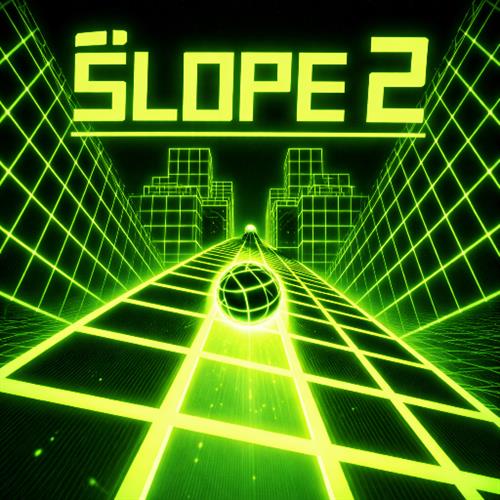




Slope 2 Game
Slope 2 relies heavily on procedural generation, meaning that each run presents a unique sequence of challenges that cannot be predicted in advance, which significantly enhances replayability and ensures that no two sessions ever feel exactly the same, and this unpredictability is a key factor in the game’s addictive nature, as players are always tempted to try “just one more run” in the hope of beating their previous score or achieving a new personal best, and speaking of scoring, the game’s scoring system is straightforward yet effective, typically based on the distance traveled or time survived, which aligns perfectly with the endless runner format and provides a clear and motivating objective for players, encouraging them to push their limits and improve their skills over time, and one of the most impressive aspects of Slope 2 is how it manages to create such a high level of engagement with such a limited set of controls, usually just the left and right arrow keys or equivalent inputs, which means that the barrier to entry is extremely low and anyone can start playing within seconds, but mastering the game requires a level of precision and timing that can take much longer to develop, as players must learn how to make subtle adjustments to their movement rather than overcorrecting, because at high speeds, even a slight oversteer can send the ball veering off the track, and this emphasis on control and finesse adds a layer of depth to the gameplay that might not be immediately apparent to new players, but becomes increasingly important as they strive to achieve higher scores, and another interesting element of Slope 2 is how it balances fairness and difficulty, as the game rarely feels unfair despite its challenging nature, because most failures can be attributed to player error rather than unpredictable or unavoidable obstacles, which helps maintain a sense of agency and encourages players to keep improving rather than becoming frustrated, and this is complemented by the game’s smooth and responsive physics, which ensure that the ball’s movement feels consistent and predictable, allowing players to develop a sense of trust in the controls, and in addition to the core gameplay, the sound design also plays a subtle but important role in shaping the overall experience, as the background music often features fast-paced, rhythmic beats that match the intensity of the gameplay and help maintain a sense of momentum, while sound effects such as the rolling of the ball or the impact of collisions provide immediate feedback that reinforces the player’s actions,